How the I-49 River Bridge Expansion Reshapes Regional Real Estate and Land Values
November 2026
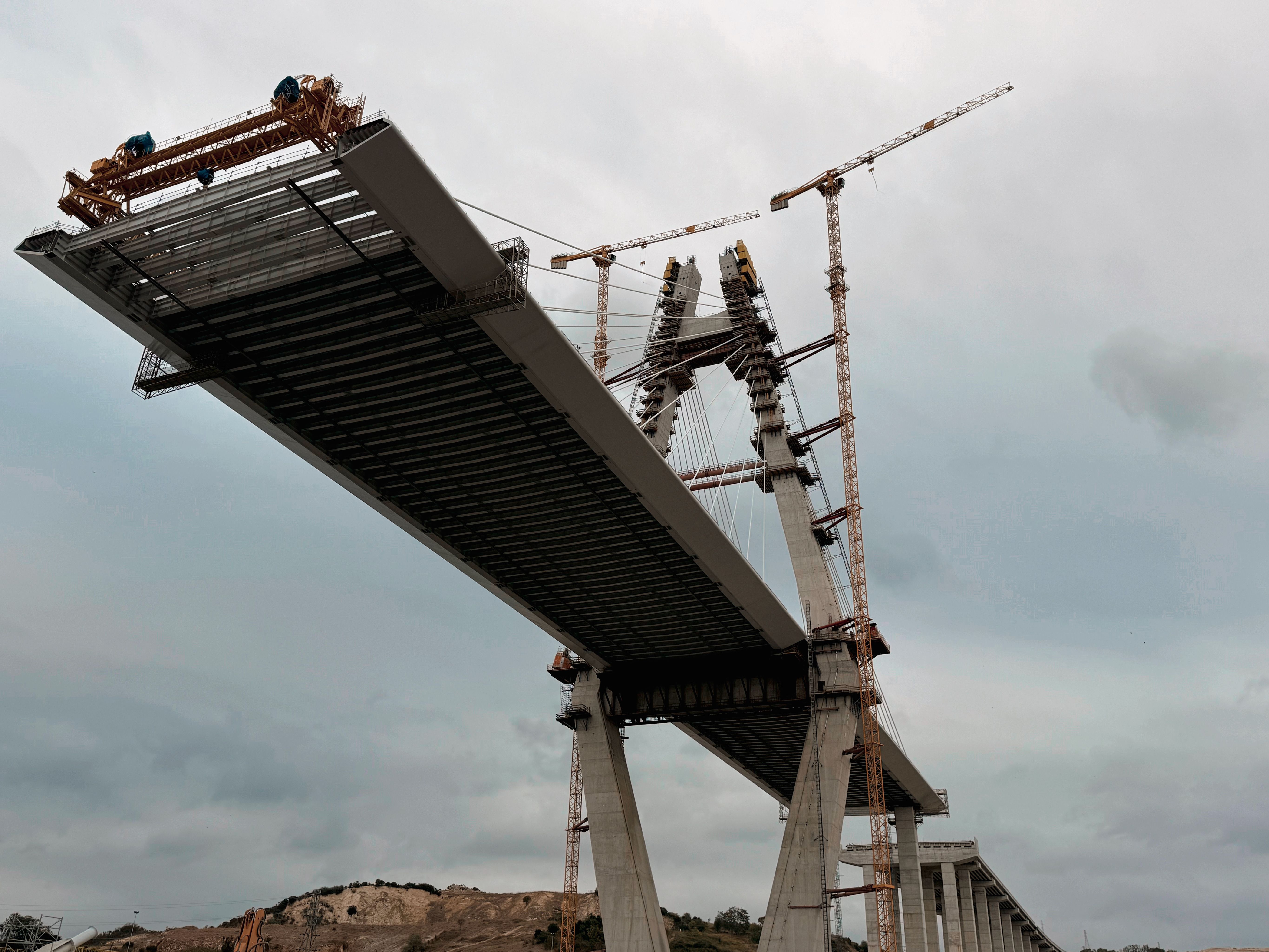
Photo from Celal Keser
A major infrastructure milestone is underway in the River Valley submarket. According to Arkansas Department of Transportation (ARDOT) district engineer Jason Hughey, as reported by Talk Business & Politics, the new I-49 bridge over the Arkansas River has reached 50% completion while using only about 40% of its allotted construction time.
Measuring 5,232 feet in length—just shy of a full mile (5,280 feet)—this bridge forms the centerpiece of the 14-mile Interstate 49 corridor connecting Alma directly to Barling, Arkansas.
While motorists look forward to driving across this new transit link, real estate investors and developers recognize a broader economic story: major civil infrastructure corridors physically redefine trade routes, accelerate submarket growth, and unlock substantial land value expansion.
Here is an analysis of how the I-49 River Bridge extension is reshaping the regional real estate landscape and why positioning multi-family housing ahead of highway completion yields long-term value.
How Infrastructure Bridges the Gap in Land Values
Major transportation contracts do not merely move vehicles; they transform secondary submarkets into strategic commercial and residential hubs.
Direct Regional Connectivity: Spanning 5,232 feet across the Arkansas River directly links northern transit corridors in Alma to Barling and the Chaffee Crossing area.
The Barling Submarket Shift: Historically a quiet area, Barling is rapidly evolving into a vital node for regional transportation, civil engineering, and military logistics.
Timing the Appreciation Curve: Property valuations along major civil corridors typically experience significant appreciation once full highway access goes live. Developing vertically integrated multi-family housing—such as Spring Hill Phase 1 on E. P Street in Barling—captures immediate construction workforce demand while establishing long-term positioning for future commuter growth.
Establishing multi-family footprints along active infrastructure lines before full highway completion allows properties to maintain high occupancy during construction while securing long-term capital appreciation.
The Triad of Economic Anchors Driving River Valley Demand
The real estate impact of the I-49 bridge extension does not occur in isolation. It operates alongside two other massive institutional drivers across the River Valley submarket:
Civil Engineering Projects: The $282.5 million Arkansas DOT river bridge contract awarded to Manhattan Road & Bridge (parent company Manhattan Construction Group) brings over 100 employees and multi-year operations to Barling. Prime contractors like Emery Sapp & Sons also maintain active project teams on adjacent highway and airport contracts.
Defense Infrastructure Capital: Nearby Ebbing Air National Guard Base hosts an $807 million federal F-35 pilot training program, drawing international military personnel, flight instructors, and defense contractors from allied nations including Germany, Poland, Finland, and Singapore.
Healthcare Capital Investments: Mercy Hospital Fort Smith continues its $280 million+ healthcare expansion (including a completed $186M ER/ICU expansion and a new $41M cancer center), creating ongoing demand to house traveling nurses and contract physicians.
When major civil infrastructure, federal defense programs, and regional healthcare expansions intersect in a single submarket, rental demand and property absorption remain exceptionally strong.
Hotel Inefficiencies vs. Structured B2B Corporate Housing
As mobile workforces, engineering crews, and defense personnel arrive to build and support these regional catalysts, local housing inventory faces immediate pressure.
Relying on extended-stay hotels introduces heavy administrative friction and high cumulative costs for contracting firms and corporate travel managers:
The Local Hotel Benchmark: Field research across Fort Smith extended-stay hotels reveals average daily rates of $134/night on 7-day stays and $139/night on 5-day stays. This translates to $3,750 to $4,170 per month per room before taxes and local fees.
The All-Inclusive B2B Residence: Dedicated 3-bedroom, 2-bathroom duplex units (1,025 sq ft with private 2-car garages) at Spring Hill Phase 1 on E. P Street carry a $3,200/month 12-month base rate. For multi-unit workforce commitments (such as 5+ units on 6-month terms), structured pricing operates at $3,000/month per unit.
Occupancy & Cost Efficiency: Because each unit accommodates up to 6 crew members (a non-negotiable occupancy standard), housing teams in private residences cuts per-worker lodging costs significantly while saving contracting firms over $1,000 per month per unit compared to separate hotel rooms.
Side-by-Side Comparison
Extended-Stay Hotel (Single Room)
Monthly Cost: $3,750 – $4,170 per month per room (before fees)
Amenities: No kitchen, no garage, single bed
Logistics: Dozens of separate receipts & constant re-bookings
Impact: High crew fatigue and worker turnover
Spring Hill Phase 1 (3BR/2BA Residence)
Monthly Cost: $3,000 – $3,200 per month total
Amenities: Full kitchen, private 2-car garage, 3 bedrooms, 1,025 sq ft
Logistics: One consolidated monthly invoice
Impact: Dedicated space for up to 6 crew members to rest and reset
One Vendor, One Monthly Invoice
Managing dozens of individual hotel receipts and room extensions drains administrative hours for project controllers and travel managers.
Consolidated Monthly Billing: Rent, high-speed Wi-Fi, all utilities, weekly professional cleaning, lawn care, trash, and on-call maintenance are consolidated into one simple monthly invoice.
Addendum-Based Footprint Growth: As project crew sizes expand or contract during different mobilization phases, additional housing units are added via simple contract addendums without renegotiating base master agreements.
Turnkey Arrival: Units arrive 100% move-in ready, complete with fully equipped modern kitchens, appliances, linens, and verified utilities, ensuring project teams can focus entirely on job execution.
Positioning Real Estate Assets for Regional Growth
At Norris Group, vertically integrated multi-family developments are designed to align directly with major civil infrastructure projects, defense initiatives, and regional economic catalysts.
Ready to Explore Multi-Family Opportunities Along the I-49 Corridor?
Are you looking to partner on multi-family developments or coordinate B2B housing for incoming engineering crews, contractors, or corporate personnel?
Schedule a B2B Housing Consultation with Red Carpet Stays to review unit availability, tour properties at Spring Hill Phase 1 in Barling, and receive a customized corporate rate proposal.
Become a Capital Partner
Interested in partnering with Norris Group?
Reach out to discuss current and upcoming development opportunities across Arkansas.